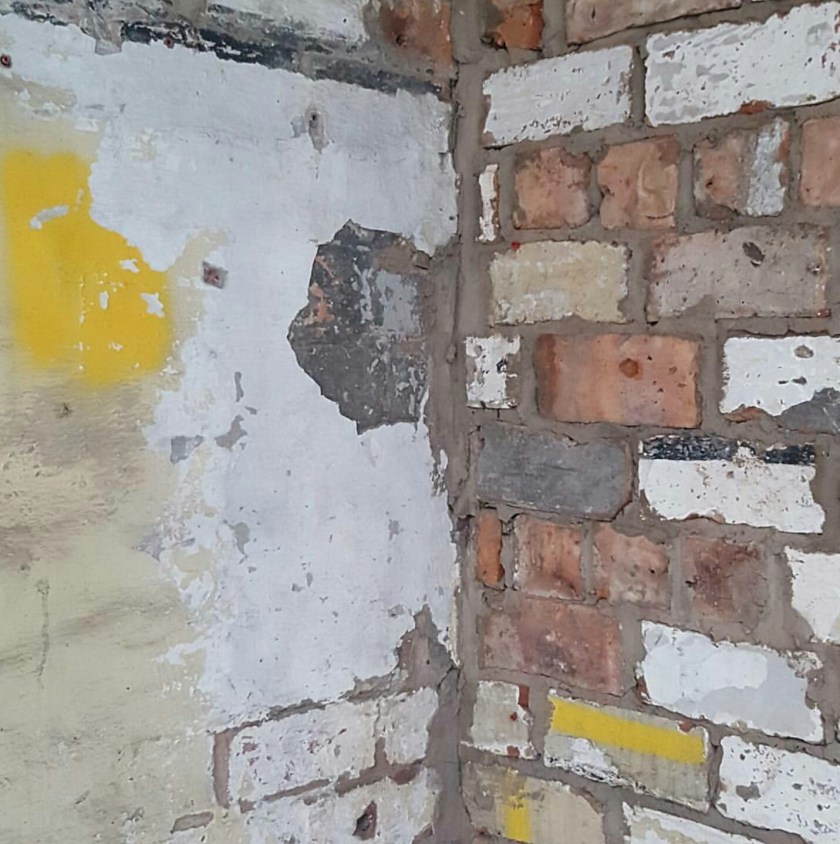
Thresholds

Unknown to myself,

Hidden in my heart,

Like a hunch in your gut,

Or a voice in the dark.


Strange street signs and alleyways,

can’t see where this leads,

One step at a time,

I trip over my feet.


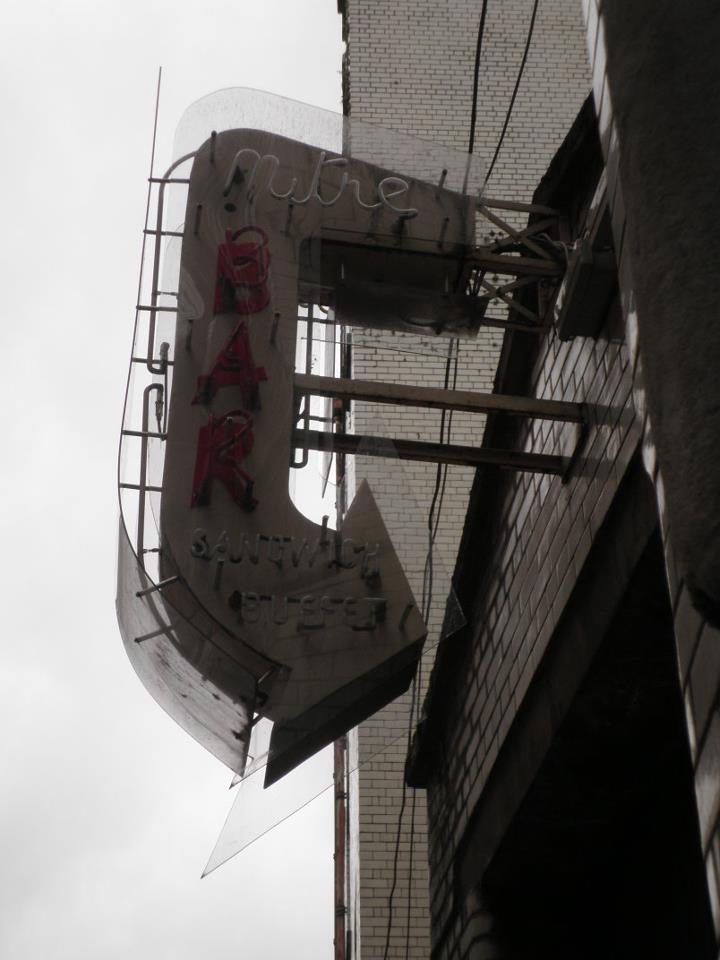
Neon letters glow

With an electric pulse,

A beacon flickers below,

And tells me where


To head first.

No hand to hold,

Go it alone.

Bodies move on impulse, and slip by close.


These are the bright lights,

They thrum and surge,

And I retreat behind them,

into the club.


EMC

Originally exhibited as part of the Stonewall Season, November 2016. 

Photo by the author.


Back to Front

People can play it mean,

When trying to hide revealing feelings.

Wounds that go deep,

Create scars that rise steep,

A peaky trip,

The altitude makes you sick.

The toughest walls

Muffle the inner calls,

For love, acceptance, a hand to hold,

A cheek to kiss,

A person to miss.

Love involves an evolution,

Leave behind seeking retribution

For past hurts,

Be brave enough to trust.

Easier said than done, when your heart’s on the run.

It’s an inner fight,

A conflict of rights,

To protect your damaged heart,

Or be loved for every part, of you.

Arctic ice will flow wherever the gusts of fear blow.

A global warming means thinning ice,

Skating on the edge of a knife,

You risk falling in,

You’ve forgotten how to swim,

Muscle memory kicks in,

Let it give you fins, and swim.

EMC. 

Photo by the author. 

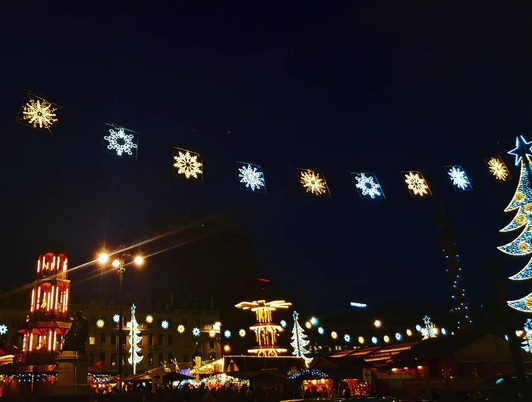
All I Want…

All I want for Christmas

Is to sleep till noon

Scoff chocolate, schlep about,

Blanket fort and pillow spoon.


All I want for Christmas

Is to shut the holly-wreathed door,

The blinds, and the curtains,

And dance around the tinsel strewn floor.


Grapes of a peaceful kind,

Spiced, mulled wine.

Bank balance zero,

Gift giving hero.


All I want for Christmas

Is to be around my folks and friends,

Made a lot easier when,

Their love translates to presence;

Presence, present… priceless.


Whether it’s spiritual or seasonal, winter or yule,

Don’t let those connections slide,

Baby it’s cold outside, keep it warm on the inside.

EMC

Photo by the author.

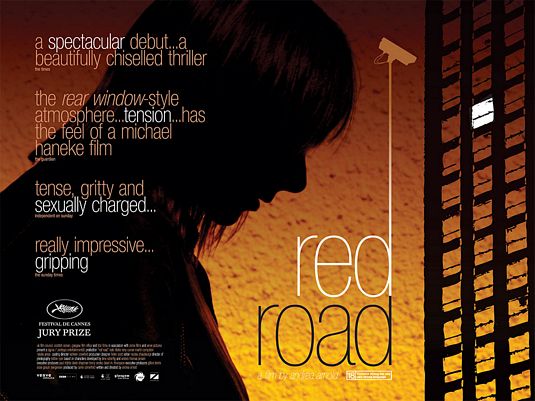
Red Road

Red Road
Director Andrea Arnold Cast Kate Dickie, Tony Curran, Martin Compston UK/Denmark, 2006

Red Road (2006) marks a particular peak in Scottish film making. A culmination of cross-country exchange and creative development, it proved a critical success, going on to win the Grand Jury Prize at Cannes. It was the first of a planned trio of films as part of the Advance Party project, a collaboration between Glasgow-based Sigma Films and Zentropa of Denmark. With elements filtering through of the Dogme95 movement and its pre-requisites, Advance Party contained its own specific criteria. This set of stipulations revolved around limiting the budget, shooting duration and filming digitally. There was also a specific focus on guiding first time feature filmmakers, which led to the involvement of Red Road writer/director Andrea Arnold.

It was Arnold’s short film Wasp (2003) which lay as a precursor to Red Road. It captured a snap shot of a young mum’s life, her four children in tow wherever she was to go, struggling to feed and clothe them. Keeping the camera close and untethered toward her female family, a precarious unpredictable quality emerged which translated well to the storytelling in Red Road. Also brought over was the short’s lead actress Natalie Press, who stars here as Martin Compston’s girlfriend. The characters to appear across all the Advance Party films were developed between Lone Scherfig and Thomas Andersen of Zentropa, but they were brought to life under Arnold’s precise guidance.

The film follows Jackie (Kate Dickie) a CCTV operator based in Glasgow, intricately unpicking the journey which has led her there. Jackie oversees the movements of a corner of Glasgow life from her monitor desk. Faced by a bank of screens, Jackie reigns omnipotent as she zooms, controls, and pieces together the fragments of the inhabitants’ lives. A scope of control all the more vital, relevant, because it has been unavailable to her privately. The grid-like assortment of screens both visualises the co-existence of people who live alongside each other and yet never meet despite their close proximity, while revealing unexpected connections.

When Jackie unexpectedly spots Clyde (Tony Curran), a recently released prisoner with whom she has an as yet unexplained connection, she crosses the barrier from screen to street. Falling into real-life pursuit, Clyde becomes her target. The nature of his connection to her is withheld from the audience for most of the film’s duration, and the increasing tension is reflected in frequently unsettled, chaotic outbursts between characters. Whoever he may be to her, the camera, and the perspective, stay firmly with Jackie. The towering Red Road blocks, from which the film takes its name, are clouded in dank gloom, enhance the sensation of foreboding. Incrementally, the reasons behind Jackie’s removal from family life, her stoical expression, her self-enforced detachment, are revealed.

The lean production format is mirrored within the film’s content, for example dialogue is utilised sparsely, and the iconic, though now party demolished, Red Road flats are laid bare. There is a development of filmic style, where a European art house aesthetic can be perceived. This is a woman’s experience set amongst a recognisable, though fractured, Glasgow, but it is in the ambiguity, the shadows and the silhouettes, and the floating carrier bag seen thrashing through the air, which attest to an alternative sensibility. Jonathan Murray comments on this in The Cinema of Small Nations (2007) when he says, “The early 2000s witnessed a collective turn to Europe that was aesthetic, thematic and industrial in nature. …these films manifested a shared desire to explore private experience and complex, extreme psychological states, rather than exploit popular genres and conventional narrative forms. [1]” Red Road, then, followed further the filmmaking path as observed by the likes of fellow Scottish productions at the time such as Wilbur Wants to Kill Himself (Scherfig, 2002), and Morvern Callar (Ramsay, 2002).

Beyond Red Road, Arnold has made further features including Fish Tank (2009) and Wuthering Heights (2011). Fish Tank in particular took themes explored in her previous work, featuring a young woman struggling with her circumstances and familial relationships. Leaving Glasgow for an Essex setting, there is a perceptible return to the waspish roots of her first foray. It is in Red Road however that an establishment in feature filmmaking was made, and with it a valuable, distinctive, contribution to Scottish film.

Originally commissioned for Glasgow Film Theatre.


[1] Hjort, M and Petrie, D (eds) (2007) The Cinema of Small Nations, Edinburgh University Press.

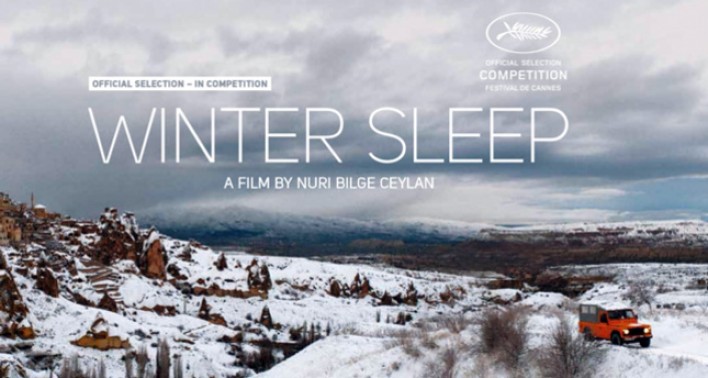
Winter Sleep

Winter Sleep Director Nuri Bilge Ceylan  Cast Haluk Bilginer, Melisa Sozen, Demet Akbag Turkey, 2014, 3h16m, 15.

Across the past two decades, the landscape of Turkish cinema has seen the emergence of leading names onto the international film scene. Sharing stylistic and aesthetic visual qualities, this crop of filmmakers have converged on themes of family, and isolation, as explored in the work of Zeki Demirkubuz in Fate (2001), an adaptation of Camus’ L’Étranger and particularly in Semih Kaplanoglu’s childhood trilogy, culminating in Bal (Honey) (2010).  The role of nature and the landscape observed in Bal, as a framework within which human foibles unfold, resonates when viewed alongside Ceylan’s oeuvre.

Ceylan’s most recent film prior to Winter Sleep was the equally measured Once Upon a Time in Anatolia (2010), which brought not only visual expanses and seemingly undramatic moments to the screen, but also the reward of the Grand jury Prize at Cannes in 2011. Roger Ebert observed of this film that Ceylan “…doesn’t slap us with the big dramatic moments, but allows us to live along with his characters as things occur to them.” [1] It is this undramatic yet simultaneously eventful quality which reflects the approaches of Ceylan’s self-confessed influences Yasujiro Ozu and Robert Bresson. [2] Films by these directors, in which a naturalistic exploration of life as it unfolds, are described by Andrew Klevan in Disclosure of the Everyday: undramatic achievement in narrative film, as types of film which have the capacity to “uncover profundity by structuring narrative around a range of life experiences…based in the everyday, that is in the routine or repetitive, in the parently banal or mundane, the uneventful.” [3] He goes on to clarify that such a style does not preclude “visually emphatic” images, a balance of seemingly opposed stylistic choices which converge in Winter Sleep; seen in the dramatic looming ‘steppes’, and the tempestuous weather system, unfolding alongside family discussion, routine habits, and otherwise emotive events (a hand smashed into a window, left to bleed) conveyed with stark lack of ceremony.

The pervasive panoramic vistas of …Anatolia punctuate Winter Sleep further, providing an integral minimalistic sparseness which not only permeates the look of the film, but also ties the characters inexorably to the landscape. The capture of these towering formations in their wide establishing shots can be linked to Ceylan’s interest in photography, sparked by a gift of a book on the skill which he was given as a child. [4] Building his own dark room and printing photographs, he developed his interest in the art, the results of which can be seen in his photographic series “Turkey Cinemascope” (2004) [5]. Here, the panoramic lens is turned to city streets and plains, revealing an ongoing fascination with this visual perspective.

The stillness captured in these photographs is transposed to the screen, wide shots used frequently, as a smaller detail placed centrally in the frame focuses the attention. Howling winds and the cry of a bird barely accompany the opening shots of the ancient and unmoving steppes in Winter Sleep, in amongst which the solitary figure of Aydin stands. His diminution against this overwhelming landscape establishes swiftly a collection of ideas which will be explored throughout the film, including isolation, disconnection, and the tension between that which changes and that which remains static and unmoving.

Symbolism is utilised with precision in Winter Sleep, as a smashed car window renders the passenger hidden and fragmented behind fractured cracks. Both Aydin and his wife Nihal are often caught looking out of windows, trapped inside, or filmed reflected in mirrors, both alluding to notions of perspective, barriers, and the question of transparency. Their peering through various looking glasses recurs throughout the film as it delves into the relationships between Ayid and his wife, and also his sister, Necla. Despite literal cracks and longing looks, there is energy and vitality as embodied in the wild horses on the local plains. The process of capture and ‘breaking-in’ required to tame the wild animal speaks more widely to the various battles for freedom and dominance which ensue across the film.

The contrasting stillness of the landscape as opposed to the active human lives within is conveyed in the predominantly static camera style, as it steadily frames the unfolding ructions. The disparity of scenes being given a chance to breathe while the characters may be suffocating further heightens the tension between what may have been dreamed or hoped for, and what is. One exchange between Ayid and his sister Necla, taking place as he writes his weekly column for the local newspaper, Necla resting on the sofa, explores the contention in their relationship in a scene lasting eighteen minutes. Not only does the frankness of the discussion capture the type of no-holds-barred honesty possible in familial relationships, it also demonstrates the impact embodied when there is seemingly no ‘action’ taking place.

Ceylan’s references to Chekhovian influences throughout the years potentially plays not only into the film as a whole, but also the theatricality Aydin embodies (himself once an aspiring thespian, not ‘actor’, as he corrects a guest on the appropriate term). The title of the film itself alludes to a frozen permanence, a Shakespearean “sleep of death” even. While mists turn to rain, and rain to snow, the relationships under scrutiny, likes branches stripped bare, become further exposed. As the characters face the complexities of each other and themselves, amidst the harsh winter, the explorations undertaken across Winter Sleep reveal a richness of character, if a cyclical inevitability in their circumstances.

Originally published on glasowfilm.org

Ebert, Roger (07/03/12) http://www.rogerebert.com/reviews/once-upon-a-time-in-anatolia-2012

Bradshaw, Peter (13/11/14), http://www.theguardian.com/film/2014/nov/13/nuri-bilge-ceylan-winter-sleep

Klevan, Andrew (2000) Disclosure of the Everyday: undramatic achievement in narrative film, Trowbridge, Wiltshire: Flicks Books. p.12

Andrew, Geoff (06/02/2009) http://www.theguardian.com/film/2009/feb/06/nuri-bilge-ceylan-interview-transcript

Ceylan, Nuri Bilge (2014) http://www.nuribilgeceylan.com/photography/turkeycinemascope1.php?sid=1

White God

White God
Director Kornél Mundruczó Cast Zsófia Psotta, Sándor Zsótér, Body and Luke Hungary/Germany/Sweden, 2014, 1h57m, 15.

Writer and director Kornél Mundruczó has observed an imbalance of power and a political shift in his home nation of Hungary, and seized upon it to frame the subject of his latest feature, White God.  Ostensibly a story of a pet dog, Hagen, cut loose from his owner Lili (Zsófia Psotta) and embarking on a journey back to her, the socio-political allegory within bares its teeth in equal measure. Winning the Un Certain Regard prize at Cannes in 2014, White God captures a pervasive mood of discontent.

It is ten years since his previous film to feature in the same category at Cannes screened (Johanna, 2005). In the meantime, diverse material has inspired him, including a foray into retelling Shelley’s Frankenstein. Here, however, a more pressing motivation caught him. While visiting an animal shelter, Mundruczó felt moved by the opposition at work, as he occupied the free side of the fence, while the dogs were captured on the other side. His part in ‘the system’ became starkly apparent. He describes this experience further, saying “I’m also the white god that makes the decisions to help them, and I felt really ashamed. And I decided to create a movie out of it.”1

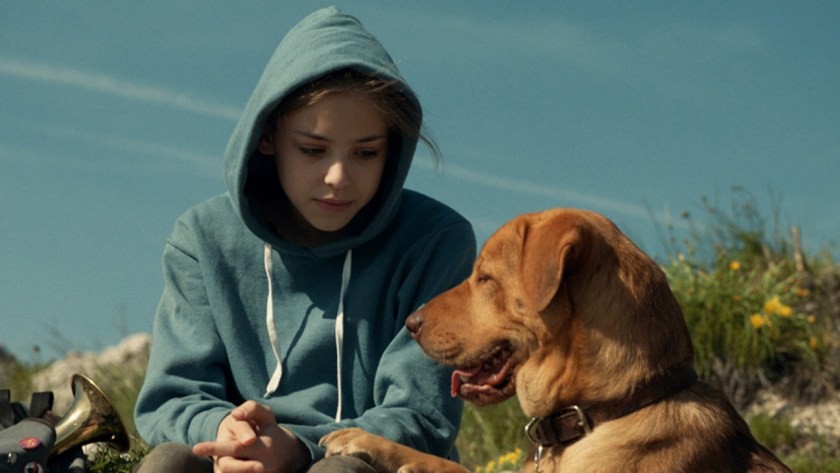
The relationship between Lili and Hagen is one of devotion, trust and heart. Lili is left with her abattoir employed Dad, while her Mum goes to work overseas. Hagen is not welcome in his new home, and finds himself banished to the bathroom for the night. Lili disobeys her father to sleep in the bath to comfort her beloved pet, serenading him with a novel lullaby as she plays the trumpet. Their relationship, separation and his consequent attempt to return evokes fellow waggy tales such as Lassie and Homeward Bound: The Incredible Journey.

The theorist Claude Lévi-Strauss suggested that “animals are good to think”; bonne a penser.  2 In this context the statement can be taken to mean that they are good to think through. Long a symbol for groups of people, animals have the capacity to reflect not just our similarities, but also our differences. Within their own structures and hierarchies they provide a vehicle through which to examine our own behaviours. It is in this way that Hagen and his pack come to represent the underrepresented. Cross-breed Hagen (portrayed by Labrador/Shepherd/Shar Pei mixes Body and Luke) is the subject of a mixed breed (or ‘mutt’) tax. Such a tax was proposed in Hungary in reality, whereby pure bred Hungarian dogs would invite no fee, and thereafter, depending on the mix, varying charges would apply. Allusions to the issues of race, immigration, and scape-goats assigned by arbitrary criteria, are pertinent.

While investigating human social structures and the balance of power, Mundruczó also raises questions of the human treatment of animals. “The consequence of most human-animal encounters is the expression of harm via the pathways of power,” Malamud asserts.3 Such a statement is visually supported by opening scenes set in the abattoir, coolly documenting the processing of carcasses that will later be consumed. He continues, “If we try to think about these animals outside the proscribed, subservient two-dimensional role to which they are

almost always relegated in our culture, we may arrive at some interesting and insightful realisation about ourselves and about how much we do not know about animals.”4 The director attempts to offer such an additional dimension by investing the dogs with agency. He does this by sharing the animal’s perspective, increasingly returning the camera to a Hagen level point of view and directly placing the viewer in his position. Such orientation is utilised at the highest moments of tension – when he is first cut loose from his owner, captured by a stranger, or released into a dog fighting ring – when the animal is most vulnerable. Identification is therefore conferred when it is best employed.

Running on parallel tracks, Lili and Hagen’s narratives go off the rails into their respective difficulties. While Lili navigates adolescence without her faithful companion, Hagen is submitted to a harmful dog-fight training regime. Subject to such brutalisation, feral behaviour begins to brew. The sharp impacts of his mistreatment at the hands of humans, and his new reliance on wild instincts to survive, brings to mind the journeys charted in Jack London’s The Call of the Wild, and White Fang. Even Black Beauty offers reference points, such are the number of hands through which the animal has passed. It is at this turning point that the film realigns itself, blurring genre boundaries. The naturalistic realism of the early scenes gives way to an altogether darker, horror infused tone. As Hagen’s wild instincts are reawakened, the film appears to descend into a dystopian nightmare. The dogs have more than one bone to pick with their oppressors.

Despite their divergent paths, one element of the filmmaking unites both Hagen and Lili in their now separate worlds. Classical music bridges their distance, from Lili continuing with her orchestra practice, to a Tom and Jerry concerto skit on the television which Hagen eyes with interest. In this way, despite the shift in tone and look to the film, a link between the two is maintained. While there are multiple metaphors at play, the music appears to represent a common language, or common humanity. Such a symbol goes on to perform a crucial role in the film, and imparts a greater message about focusing on what we share, rather than what we don’t. A timely modern parable, drawing on the best aspects of its predecessors, White God imploringly asks for understanding, acceptance and unity across differences.

Originally published on glasowfilm.org  Feb 2105

[1]http://www.slate.com/blogs/browbeat/2015/01/30/white_god_director_korn_l_mundrucz_on_the_movie_s_animal_rights_message.html

[2] Claude Lévi-Strauss, Le Totemisme Aujourd’hui (1962)

[3] Randy Malamud, An Introduction to Animals and Visual Culture p. 71 (2012)

[4] Randy Malamud, An Introduction to Animals and Visual Culture,  p. 24 (2012)
Pencilled In

My submission to the University of Aberdeen’s Book Week Scotland Flash Fiction competition.

———

The blankness was intimidating. White vastness like untouched snow. Not a mark, an indentation, or a print. Except for her. This was square one. Of how many squares there might be she didn’t know. She hadn’t seen any others.

She looked at the shadows and lights of her arms and used them as a guide. A drawing from life, still. Finger outstretched, she daubed graphite liberally in front of her. Softly edging out fine lines in a pattern, cross-hatching. This would create the wall. The scale of it made her nervous, but false confidence took hold. It was better than none.

She began to push the lead into the paper with increasing force. When removed to create highlights it would leave a starker contrast. The background had to be not just dark, but like the midnight hours. As if you had your eyes closed with your hand on top too. Her arm was moving quicker and quicker against the resistance of the paper, when it moved. Jolted right in front of her. She froze immediately.

Deliberately slowing down she resumed with conscious care. A crease in the newly drawn wall was throwing the evenness of her lines off. With some more shading in exactly the correct place perhaps she could trick the eyes. Peering very closely, finger all that was separating her nose from patterns in rows, she pushed. It was one push too far, the weakened structure broke, a rip taking a trajectory of its own accord, rapidly splitting all the way down to the ground. Through the space, a solitary eye blinked directly into hers. “I think I’m your neighbour. I drew the square next door?” Like lifting up a bedraggled, loose piece of wallpaper she pulled the paper away and saw a stick drawing in their own line drawn home. Their uncomplicated circle face with oval eyes containing another circle each, and dots for the pupils, nodded her in. She stepped through the paper, careful not to smudge any of herself on either of their designs.

They showed her round, pointing out the garden, sharing ideas, and patterns. They were taken aback at her own appearance. She had worked on herself before her surroundings, creating more depth and detail, practising. Then she had turned outwards, drawing whatever felt right and true. “I’m more words than drawings,” they said. Smiling sympathetically to themselves. They handed her a book. “I wrote that. All from my own imagination.” She gladly took it. She had never seen a book before, and didn’t know what it would contain or if she could make sense of it. Slipping back through the tear in the wall, both agreed to keep it there until she had made her own door and outside, to see if she could get round that way. Until then, she would leave a small gap in the paper rip.

She rocked herself in her newly drawn chair. Ankles rotating in gentle motion, she set out to discover her book.

The story was inspired by the image above, ‘Wood cut ‘October’ by Eric Ravilious from Almanack 1929 Watt 686 209 Lan a